Undergraduate Program in Political Science
The purpose of the Political Science program is to train specialists in the political field in its human, social and institutional aspects, enable them to understand and finely grasp its multiple dimensions and equip them with the various tools allowing them to study it or act in it wisely and efficiently. To train such profiles, the course combines courses intended to jointly develop theoretical hindsight, sensitivity to practical requirements and the art of making decisions.
The specificity of the undergraduate degree in political science is based on the balance between quantitative and qualitative methods, the versatility of its teaching aims at developing the students' ability to synthesize and to bring out interrelated solutions, in touch with the reality of the populations. The program supports ambitious training through the acquisition of theoretical and empirical tools from a national and African perspective.
The degree in Political Science is made up of two blocks:
- a block containing a set of modules followed by all the students of each of these two undergraduate programs – in other words a “Major”
- 6 modules, students choose from a list of 7 concentrations – in other words a “Minor”
The diversity of possible combinations between the "Major" and the "Minor" allows the students to build a tailor-made profile, adapted to their aspirations and meeting the current requirements of the labor market.
The choice of a concentration is not compulsory in the Applied Economics, Behavioral Sciences for Public Policy and Public Law undergraduate programs.
However, students in these two programs can add modules specific to their program, by spending an additional semester at the FGSES, after obtaining their undergraduate degree.
Concentration modules start in L2.
La licence en Science politique a pour but de former des spécialistes du domaine politique, au sens large, aptes à comprendre et saisir avec précision ses multiples dimensions, et dotés des différents outils permettant de l’étudier ou d’y agir de manière avisée et efficiente. Pour former de tels profils, la filière associe des enseignements destinés à développer conjointement le recul théorique, la sensibilité aux exigences pratiques et l’art de prendre des décisions.
La licence en Science politique se compose de deux blocs :
- un bloc contenant un ensemble de modules suivis par tous les étudiants de la licence, dit un bloc « majeur »
- une « concentration » composée de 6 modules, que les étudiants peuvent choisir librement dans une liste de 7 concentrations – autrement dit un bloc « mineur »
La diversité des combinaisons possibles entre le bloc « majeur » et les concentrations permet à l’étudiant de construire un profil sur mesure, adapté à ses aspirations et répondant aux exigences actuelles du marché du travail.
- Next intake September 2026
- Deadline to apply March 2026
- Language of instruction English & French
- Duration 3 years
- ECTS 180
Why choose our program ?
7 concentrations to choose from
In the second year of the Political Science undergraduate program, students can select from a range of concentrations to tailor their studies to their academic interests and professional goals. This flexibility allows students to develop a specialized profile that aligns with their aspirations, while also meeting the evolving demands of the job market.
Career Opportunities
The Political Science program prepares for a wide variety of professions, graduates are present in all sectors, both public and private. Thus, the training prepares for careers as executives in the public service, private companies, NGOs, international organizations, advisers or for management and consulting. It also makes it possible to prepare for careers in training and research.
International Mobility
At FGSES, we prioritize global engagement by offering exchange programs starting in the third year, allowing students to spend a semester abroad at one of our partner universities worldwide. These opportunities enrich students' academic experiences and provide valuable advantages for their future careers.
A word from our students
Courses & Program structure
Program Structure
Courses by Semester
- (POL206) Accompagner le Changement dans les Politiques Publiques (4/5)
- (POL204) Comparative Politics: Regimes, Upheaval, and Transformations (4/5)
- (POL205) Le Jeu des Acteurs Politiques (4/5)
- (INT307) Monitoring and Intelligence (4/5)
- (RES203) The Research Process (4/5) (prerequisite for PFE)
- Two concentration courses
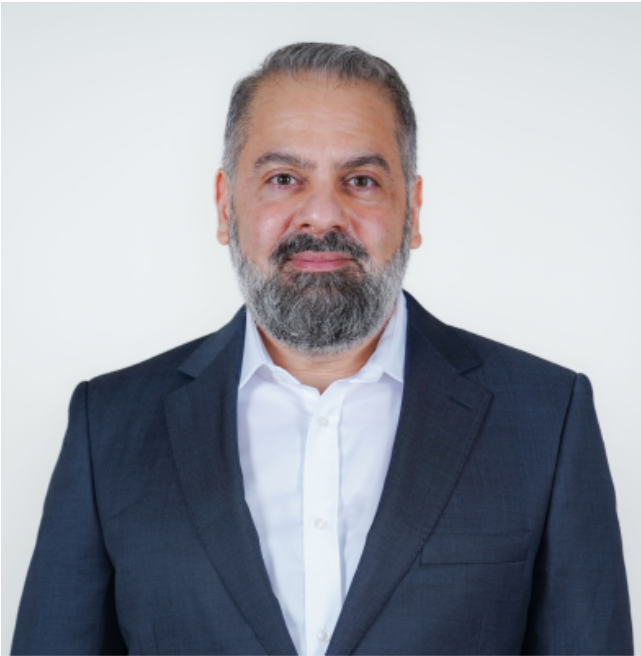
Program Coordinator
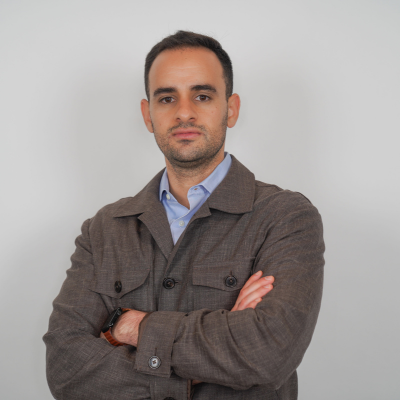
Professors
Amir
ABDUL REDA
Political Science
Jan Galip
Erk
Political Science
Déborah
PEREZ
Political Science

Moritz
SCHMOLL
Political Science
Abdallah
Saaf
Political Science
Nicolas
Porot
Behavioral and Social Sciences
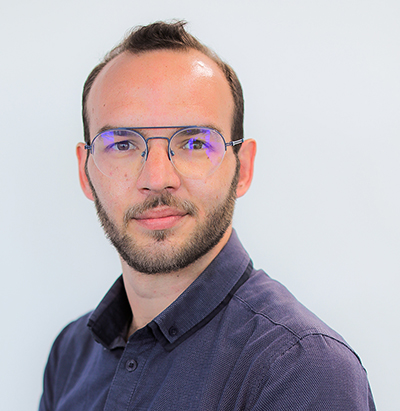
Emmanuel
TROUCHE
Behavioral and Social Sciences
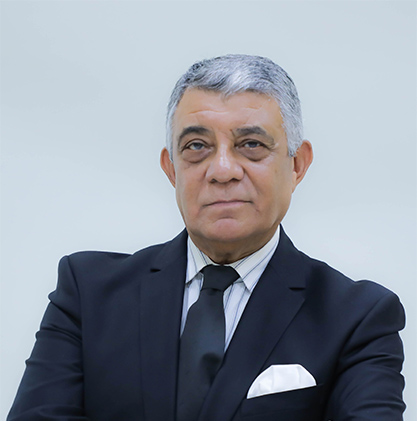
Mohammed Amine
Benabdallah
Law
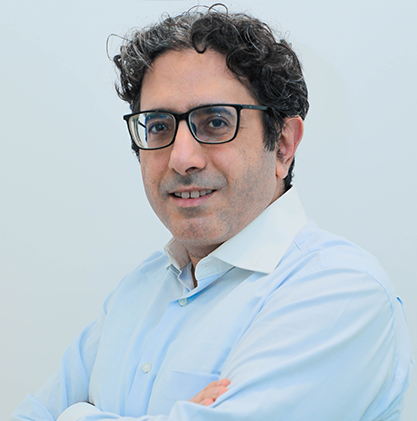
Faiçal
HOSSAINI
Economics
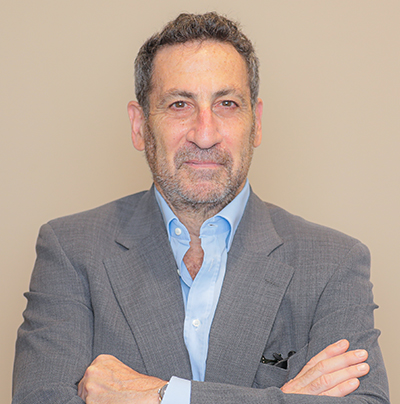
David
SYLVAN
International Relations
Abdelhak
Bassou
International Relations
Hassan
Rachik
Anthropology
khalid
Chegraoui
International Relations
Semester 1
- (ECO101) Introduction à l'Analyse Economique
- (HIS103) Le Monde : Une Histoire Moderne et Contemporaine
- (LAW101) Introduction à l'Etude du Droit
- (POL101) Introduction à la Science Politique
- (RES101) Méthodes d'Apprentissage Appliquées
- (DAT104) Statistiques Descriptives et Probabilités OR (DAT107) Introduction to Statistics For Social Sciences
Semester 2
- (BEH102) Introduction to Behavioral Science
- (INT102) Introduction to International Relations
- (RES102) L’écriture à l’ère digitale
- (HIS104) Culture Historique : Les Mondes Anciens et Médiévaux (Prerequisite)
- Two optional courses to be chosen
Semester 3
- (BEH202) The Pitfalls of Decision-Making (2/3)
- (POL201) Institutions Politiques Marocaines (2/3)
- (POL203) Politique et Economie (2/3)
- (POL212) Systèmes Politiques Comparés et Philosophie Politique
- One elective course to be chosen
Semester 4
- (POL206) Accompagner le Changement dans les Politiques Publiques (4/5)
- (POL204) Comparative Politics: Regimes, Upheaval, and Transformations (4/5)
- (POL205) Le Jeu des Acteurs Politiques (4/5)
- (INT307) Monitoring and Intelligence (4/5)
- (RES203) The Research Process (4/5) (prerequisite for PFE)
- Two concentration courses
Semester 5
- (ANT301P) Pouvoir et Société au Maroc
- (POL 306) Undergraduate Program in Political Science
- One concentration course
- One elective course to be chosen
Semester 6
- (HIS301) Histoire de l'Afrique Contemporaine
- (POL302) Public Opinion, Elections and Voting
- (POL304) Les Politiques Publiques: Elaboration, Mise en Œuvre et Evaluation
- One concentration course
- (RES300) PFE / Thesis OR 2 Electives
Semester 6
- (RES300) PFE / Thesis OR 2 Electives
Language courses
Semester 4
Semester 5
Semester 6
Semester 2
Semester 2
- (HIS104) Culture Historique : Les Mondes Anciens et Médiévaux (Prerequisite)
Find out more
Applications for the 2025-2026 academic year are now closed.
Applications for the 2026-2027 academic year will open on December 15th, 2025. In the meantime, you can learn more about our programs and opportunities to see how we can help you achieve your academic and career goals.